
HEAP symposium – How what we buy affects our health
How do our everyday purchases affect our health? In his contribution to the HEAP symposium highlights series, Frederik Trier Møller, leader of HEAP’s Consumer Cohort, outlines how Consumer Purchase Data (CPD) from loyalty programs and digital receipts can be used to assess the effect of consumer products on our health. He introduces the GDPR-compliant, secure, […]
HEAP symposium – Epigenetics and personalised preventative medicine

Can we predict someone’s risk of developing cancer by looking at their DNA markers? In her contribution to the HEAP symposium highlights series, Chiara Herzog, Postdoctoral researcher. European Translational Oncology Prevention and Screening (EUTOPS) Institute, University of Innsbruck, presents the HEAP Lifestyle cohort, and her research into risk identification (WID) for breast or ovarian cancers […]
HEAP symposium – DNA markers, ageing and lifestyle

How does age, and lifestyle factors such as drugs, hormones, smoking, and nutrition, affect our DNA? In his contribution to the HEAP symposium highlights series, Martin Widschwendter, Director of the European Translational Oncology Prevention and Screening (EUTOPS) Institute, University of Innsbruck, Austria, presents his research into DNA markers that are changed by both genetic and […]
HEAP symposium – Personal exposome profiling

Can we prove that someone has been exposed to certain chemicals that have affected their health? In his contribution to the HEAP symposium highlights series, Michael Snyder, Director of the Center for Genomics and Personalized Medicine at Stanford University, presents his research into individualized environmental exposures. The research compared thousands of chemical and biological components […]
HEAP symposium – Exposome data and the HEAP technical platform

How will the Human Exposome Assessment Platform’s data analysis tools work? And how will they add value to exposome research? This HEAP symposium presentation from the platform’s lead architect, Jim Dowling, outlines how the platform can develop, operate, and manage applications and data at scale, and how these capabilities will add value to the data […]
HEAP symposium – Ethics, law and big data
How can the results of exposome research further the right to health for all? And how can this be achieved in an ethical way, respecting the rights of those whose data and tissue are being used? In his contribution to the HEAP symposium highlights series, Evert-Ben Van Veen, a lawyer specialising in health and privacy […]
HEAP symposium – The exposome and cancer research
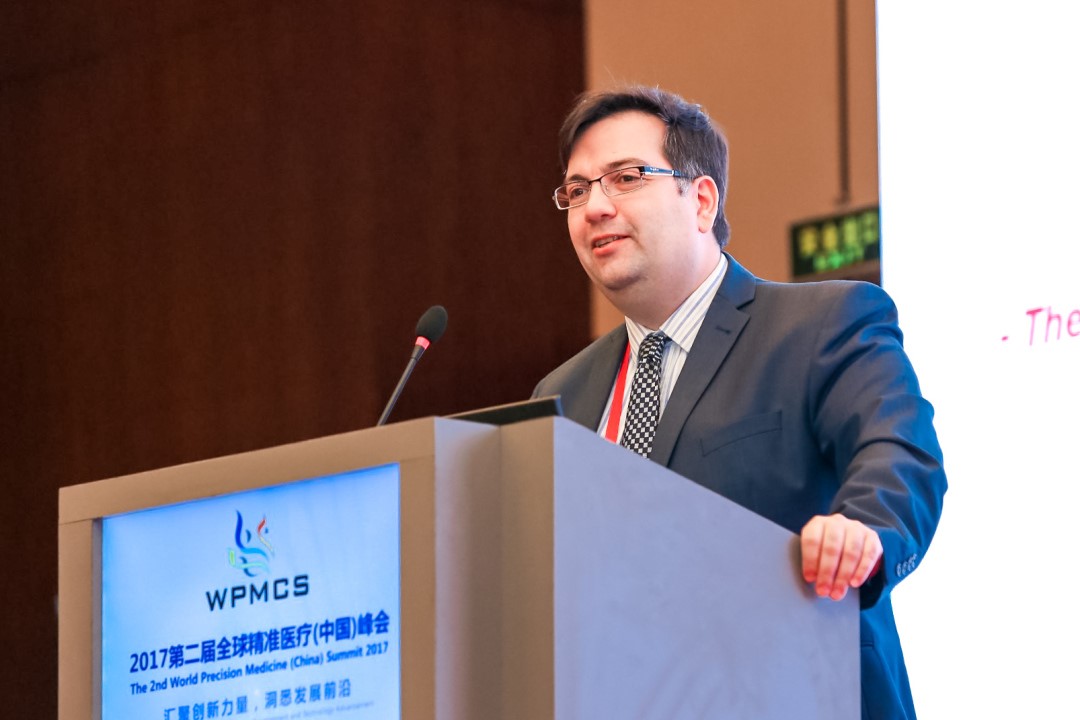
Dr. Zisis Kozlakidis is the Head of Laboratory Services and Biobanking at the International Agency for Research on Cancer (IARC/WHO). He has significant expertise in the field of biobanking, and has served as President of ISBER. In his contribution to the HEAP Symposium highlights series, he traces the history of the exposome concept and its […]
HEAP symposium – Infrastructures for exposome research

What does the future hold for exposome research infrastructures in Europe? Jana Klánová is Professor of environmental chemistry at Masaryk University in Brno, Czech Republic, and coordinator of the ESFRI Research Infrastructure for human exposome (EIRENE). In her contribution to the HEAP Symposium highlights series, she presents EIRENE RI (Research Infrastructure for EnvIRonmental Exposure assessmeNt […]
HEAP symposium – “Measuring the exposome – delusion or next frontier?”

Is it even possible to measure the exposome? In his contribution to the HEAP Symposium highlights series, Benedikt Warth, Associate Professor at the University of Vienna and founder of the ‘Global Exposomics and Biomonitoring Laboratory’, presents workflows for omic-scale investigations of toxicants. The example he presents is based on liquid chromatography coupled with mass spectrometry (LC-MS), and […]
HEAP symposium – the promise of informatics and precision medicine

The next frontier of exposome research will focus on genomics, transcriptomics, proteomics, and metabolomics, and seek to identify optimal treatments for individual patients. In the next instalment of the HEAP Symposium highlights series, HEAP project coordinator Professor Joakim Dillner explores the potential of informatics to make Precision Medicine a reality. He then outlines the six […]